Free download · 0% form friction

Free Sell-SideData Room Checklist

The same diligence index Main Street Wealth uses on $1M+ EBITDA sell-side engagements. 8 root folders, 300+ items, plus a 5-step launch-readiness gate. Built for owners, CFOs, and counsel preparing for an exit.

No email gate · No tracking pixels in the PDF · Confidential
Comprehensive PDF Checklist
300+ items · 8 folders · 5-step launch gate
  • Citation-backed prep cycle: QofE, CIM, index, launch
  • Sub-folder breakdowns for Financial, Commercial, Ops, Legal, Tax, HR
  • Three-tier buyer access model (NDA, finalists, winning bidder)
  • Plain-language summaries for non-finance contributors
Download the checklist

The data room in numbers

Independent benchmarks and Main Street Wealth deal data behind the checklist.

300–600
documents in a typical lower middle-market data room
8 folders
standard sell-side root taxonomy
~60%
of buyer diligence hours sit in the Financial folder
<10%
single-customer concentration cap most buyers underwrite to
60–90 days
typical LOI-to-close diligence window
~70%
of US LMM deals use reps & warranties insurance

Visual guide

Six infographics walking the data room end-to-end

Pulled from the same source material as the PDF — built for fast skimming and team alignment before kickoff.

01

The Sell-Side Data Room — Why a Clean One Moves Closing Price

How an organized VDR shortens diligence by 30–45 days and removes the most common reasons for buyer retrades.
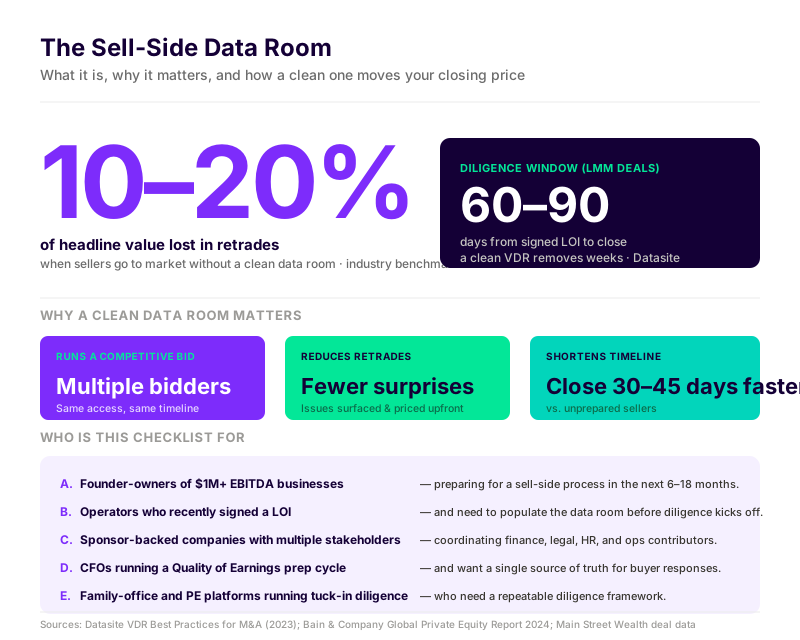
The Sell-Side Data Room — Why a Clean One Moves Closing Price
02

Recommended 8-Folder Root Structure

The taxonomy used in modern sell-side processes on Datasite, Firmex, Intralinks, and Ansarada.
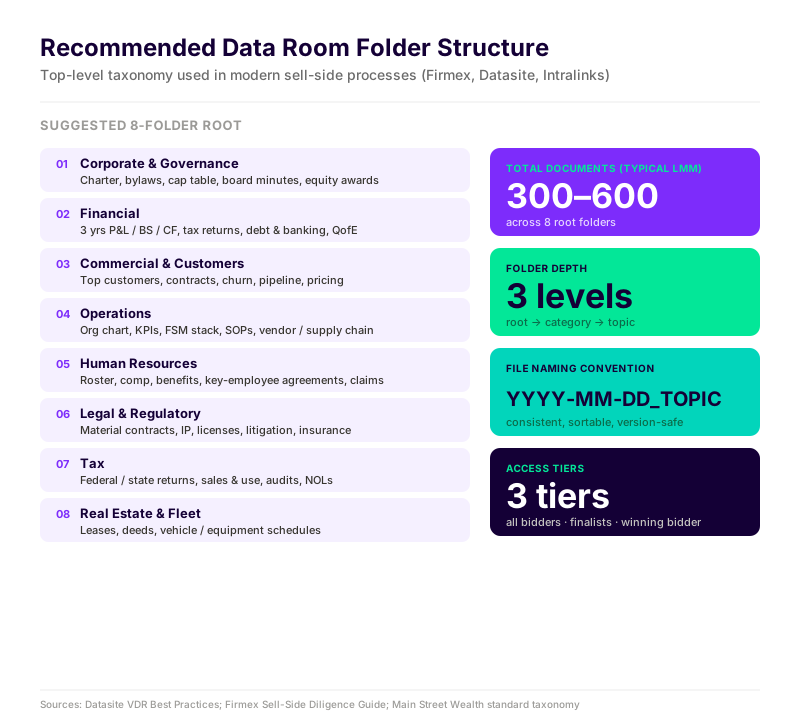
Recommended 8-Folder Root Structure
03

Financial Section — 60% of Buyer Diligence Hours

QofE-ready financials, debt & banking, and forecast tabs that survive a competitive auction.
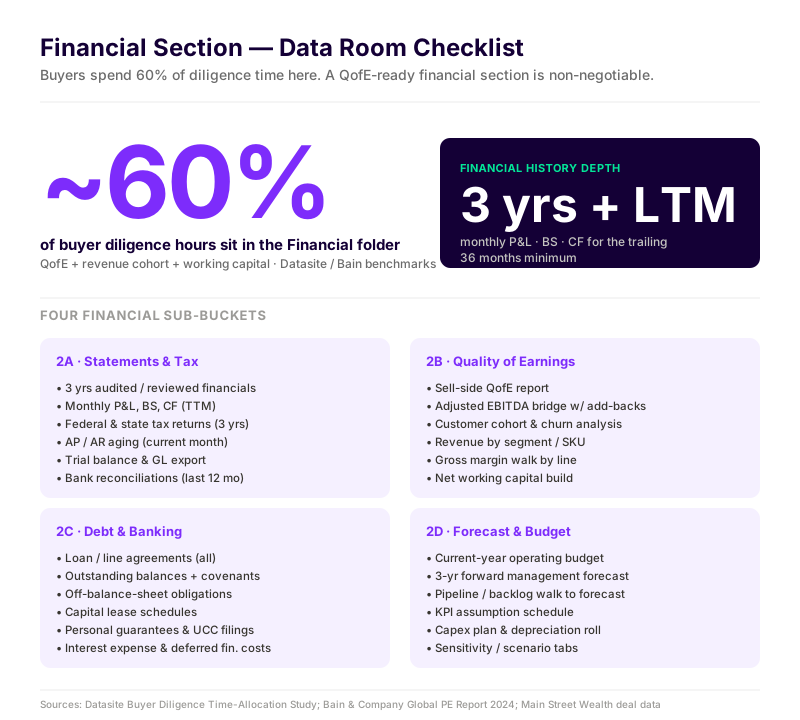
Financial Section — 60% of Buyer Diligence Hours
04

Commercial & Operations — What Sets the Multiple

Customer concentration, recurring revenue mix, and the operating data PE buyers underwrite to.
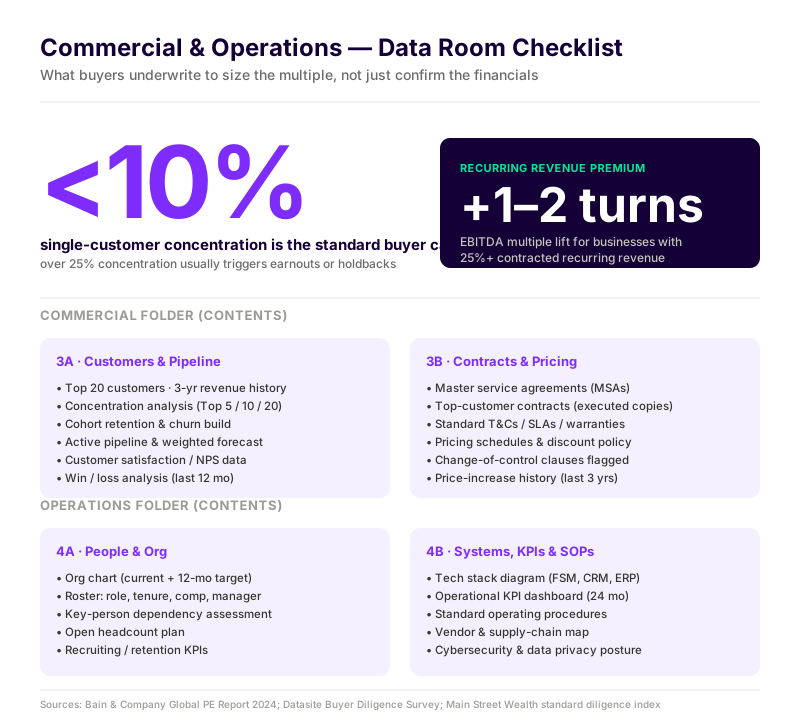
Commercial & Operations — What Sets the Multiple
05

Legal · Tax · HR — Where Surprises Hide

The folders that produce most reps & warranties exposure and survival-period negotiations.
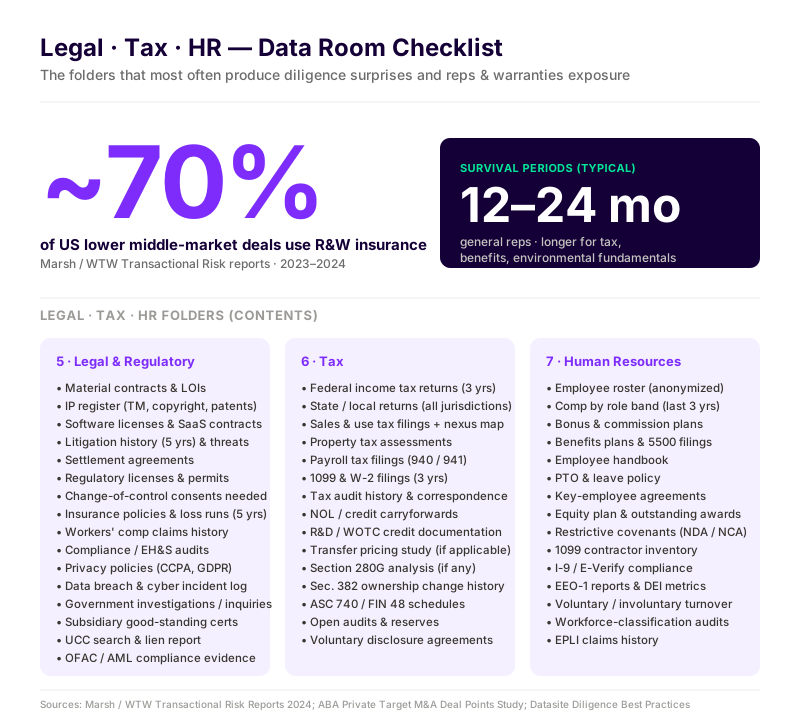
Legal · Tax · HR — Where Surprises Hide
06

Launch Readiness — 5 Gates Before Granting Buyer Access

Final QA pass: redactions, access tiers, Q&A workflow, and external counsel sign-off.
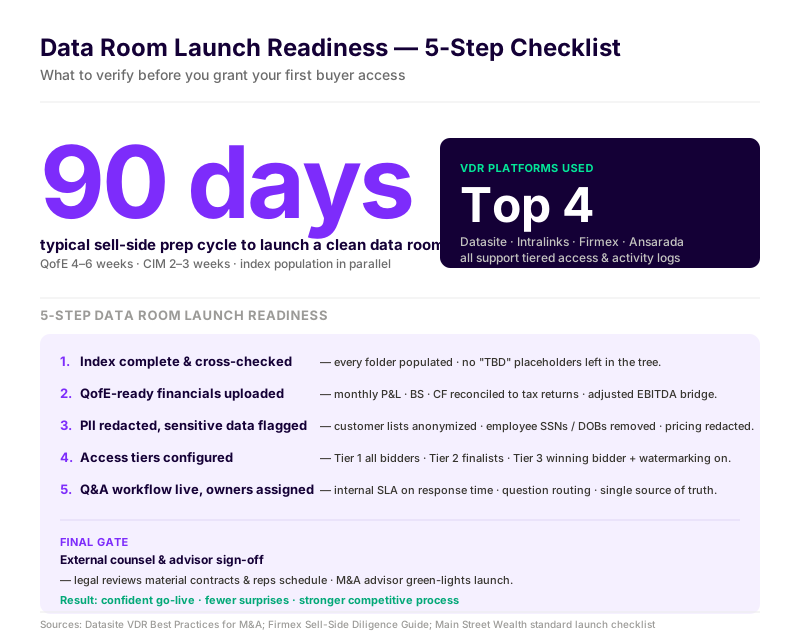
Launch Readiness — 5 Gates Before Granting Buyer Access

What is inside the checklist

Eight root folders, sub-folder breakdowns, and a launch-readiness gate.

01

Corporate & Governance

Charter, bylaws, cap table, board minutes, equity awards.

02

Financial

Statements & tax, QofE, debt & banking, forecast & budget.

03

Commercial & Customers

Top customers, contracts, churn, pipeline, pricing.

04

Operations

Org chart, KPIs, FSM stack, SOPs, vendor & supply chain.

05

Human Resources

Roster, comp, benefits, key-employee agreements, claims.

06

Legal & Regulatory

Contracts, IP, licenses, litigation, insurance.

07

Tax

Federal / state returns, sales & use, audits, NOLs.

08

Real Estate & Fleet

Leases, deeds, vehicle & equipment schedules.

FAQ

Sell-side data room — frequently asked questions

Practical, data-backed answers for owners, CFOs, and counsel preparing a sale process.

What is a sell-side data room?
A sell-side data room (or virtual data room / VDR) is a secure online repository where the seller organizes every confidential document a buyer needs to underwrite an acquisition — financials, contracts, legal, tax, HR, and operational records. In modern M&A, virtually every $1M+ EBITDA transaction runs through a VDR like Datasite, Firmex, Intralinks, or Ansarada. The data room is the single biggest determinant of how smoothly diligence runs and how quickly you close.
How long does it take to build a clean data room?
A typical preparation cycle is 6–12 weeks. Quality-of-earnings (QofE) takes 4–6 weeks, the CIM another 2–3 weeks, and folder population can run in parallel. Owners who try to compress this into 2–3 weeks routinely lose 6–12 months and 10–20% of headline value to retrades during diligence.
Who should have access to the data room?
Use three access tiers. Tier 1 (all qualified bidders under NDA): high-level financials, public filings, redacted contracts. Tier 2 (finalists post-LOI): customer-specific contracts, key-employee agreements, full QofE. Tier 3 (winning bidder): un-redacted PII, payroll detail, sensitive litigation. Watermark every document and turn on activity logging to track buyer engagement.
What goes in the financial folder?
At minimum: 3 years of audited or reviewed financials, monthly P&L / balance sheet / cash flow for the trailing 36 months, federal and state tax returns, AP/AR aging, trial balance, sell-side QofE report with adjusted EBITDA bridge, debt and banking schedule, and a 3-year forward management forecast tied to a documented assumption set. This folder usually consumes about 60% of buyer diligence hours.
How is this different from a buy-side checklist?
A buy-side checklist is a request list — what the buyer asks the seller for. A sell-side checklist (this one) is a preparation index — what the seller proactively populates before launching the process. Sellers who anticipate buy-side requests and stage their data room around them run materially faster, smoother diligence cycles.
Do I need this if I’m not selling soon?
Yes. The earlier you start populating a sell-side data room, the better. Twelve to 24 months ahead of a sale, the data room becomes a forcing function for cleaning up financials, formalizing employment agreements, surfacing tax exposure, and building the operational reporting buyers expect. Sellers who do this work early consistently transact at higher multiples and with cleaner deal structures.

Need a hand actually populating yours?

We run sell-side processes end-to-end for $1M+ EBITDA founders. Free 60-minute confidential strategy session, no obligation.

Confidential · No obligation · Top 25 Lower Middle-Market Firm (Axial 2025)